
The High King Sutra According To Mr Ding Fubao
A Brief Introduction To Mr Ding Fubao, Authour Of The Highly Influential A Dictionary Of Buddhist Terms
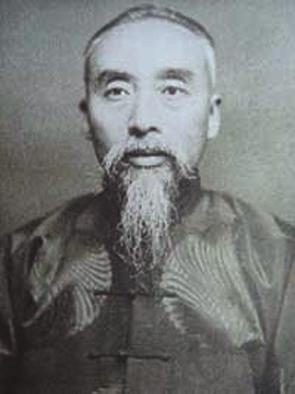
Ding Fubao (丁福保, 1874–1952) was a remarkably versatile Chinese scholar whose Dictionary of Buddhist Terms (佛學大辭典) became one of the most influential reference works in modern East Asian Buddhist studies. It is still widely available in Chinese language and has been reprinted many times, the most recent being in 2017, showing it’s lasting status and appeal.
A trained medical doctor, philologist, publisher, and numismatist, Ding brought together an unusual combination of rigorous textual training, multilingual ability, and a passion for Buddhist learning.
Why A Dictionary of Buddhist Terms Was So Influential
Ding’s Dictionary of Buddhist Terms (佛學大辭典), first published in 1922, is widely regarded as his most important Buddhist work. Its influence rests on several key factors:
- Unprecedented scope and scale – The dictionary contained over 30,000 entries, the largest compilation of Buddhist terminology in Chinese at the time. It took Ding eight years to complete, reflecting extraordinary scholarly dedication.
- Synthesis of Chinese, Japanese, and Sanskrit sources – Ding based the work on Oda Tokunō’s Bukkyō daijiten and numerous other sources, integrating East Asian and Indic materials into a single reference system. This made it a bridge between traditional Chinese Buddhist scholarship and modern, international Buddhist studies.
- Clarity and accessibility for modern readers – Ding’s background in philology and publishing allowed him to present complex doctrinal, historical, and textual information in a clear, systematic format. Scholars have noted that his works helped readers “navigate the turbid sea of Buddhist scriptural texts,” making Buddhist terminology far more accessible to students and researchers.
Foundational role in 20th‑century Buddhist scholarship – At a time when Buddhist studies in China were undergoing modernization, Ding’s dictionary provided a standardized vocabulary and reference framework. It became indispensable for monks, lay scholars, translators, and academics throughout East Asia.
Even a century after its publication, Ding Fubao’s dictionary remains a foundational tool in Chinese Buddhist studies. It shaped how Buddhist terminology is understood, translated, and taught, and it continues to serve as a bridge between classical Buddhist literature and modern scholarship.
Given the sheer breadth and scale of Ding Fubao’s research, we can consider it a very helpful and balanced view of the topic, written without sectarian bias.
Translation Of His Entry Regarding The High King Sutra
[The High King Avalokitesvara Sutra]
(The Name of the Sutra) During the Eastern Wei Dynasty in the Tianping era, this Sutra was revealed to people during the reign of High King, known as the Avalokitesvara Sutra.
In “The Continued Biographies of Eminent Monks” Volume 29 and “Fayuan Zhulin” Volume 25, it is referred to as the Avalokitesvara Sutra for Saving Lives, and it is also called the High King Avalokitesvara Sutra.
In “The Complete Chronicle of the Buddhas and Patriarchs” Volume 54, it is referred to as the Ten-Phrase Avalokitesvara Sutra, and in “The Summary of Ancient Studies” Volume 2, it is called the Avalokitesvara Sutra for Relieving Suffering.
In “The Continued Biographies of Eminent Monks” Volume 29, it is said:
“In the past, during the Tianping era of the Yuan Wei (Northern Wei) Dynasty, a soldier named Sun Jingde from Dingzhou sculpted a statue of Avalokitesvara at a defense site. After completing the statue and returning home, he would often worship it. Later, he was captured by bandits and imprisoned in the capital. Unable to endure the torture, he falsely confessed to a crime and was sentenced to death.
[A section is omitted here]
He then had a dream in which a monk instructed him to recite the Avalokitesvara Sutra for Saving Lives, a scripture containing the name of the Buddha, and to recite it a thousand times to avoid death.
Upon waking, Sun Jingde remembered the Sutra from the dream and found it was exactly as he had seen. By dawn, he had recited it a hundred times. When the officials came to take him to the execution ground, he continued to recite the Sutra while walking.
Just before the execution, he had completed a thousand recitations.
When the executioner struck with the sword, it broke into three pieces. They replaced the sword three times, but his skin and flesh remained unharmed.
Amazed, the officials reported this to the Prime Minister Gao Huan, who then submitted a request to spare him from execution.
The Sutra was thus copied and spread throughout the world, and it is what we now call the High King Avalokitesvara Sutra.“
However, the Ming Dynasty monk Lianchi considered this sutra to be pseudepigrapha.
Original text:
【高王觀世音經】The High King Avalokitesvara Sutra
(經名)東魏天平年中,高王時人所感得之觀音經也。續高僧傳二十九,法苑珠林二十五謂之觀世音救生經,又云高王觀世音經。佛祖統紀五十四謂之十句觀音經,稽古略二謂之救苦觀音經。續高僧傳二十九曰:「昔元魏天平,定洲募士孫敬德,於防所造觀音像。及年滿還,常加禮事。後為劫賊所引,禁在京獄,不勝拷掠,遂妄承罪,並處極刑。(中略)夢一沙門教誦觀世音救生經,經有佛名,令誦千遍,得免死厄。德既覺已,緣夢中經,了無謬誤。比至平明,已滿百遍。有司執縛向市,且行且誦。臨欲加刑,誦滿千遍。執刀下斫,折為三段。三換其刀,皮肉不損。怪以奏聞,丞相高歡,表請免刑。仍敕傳寫,被之於世,今所謂高王觀世音經是也。」明蓮池以此經為偽經。
From this dictionary entry, it is clearly apparent that this sutra was widely known and widely read over centuries. Mr Ding Fubao himself had passed away more than three decades before it became widely known again through the activities of His Holiness Living Buddha Lian Sheng and True Buddha School. This reaffirms that this sutra is available for all regardless of lineage. Since it consists of the names of buddhas with a mantra that comes from a sutra spoken by Buddha, there is no reason to doubt it.
As Master Sheng Yen of Dharma Drum stated, “There has been no harm from students reciting it”.